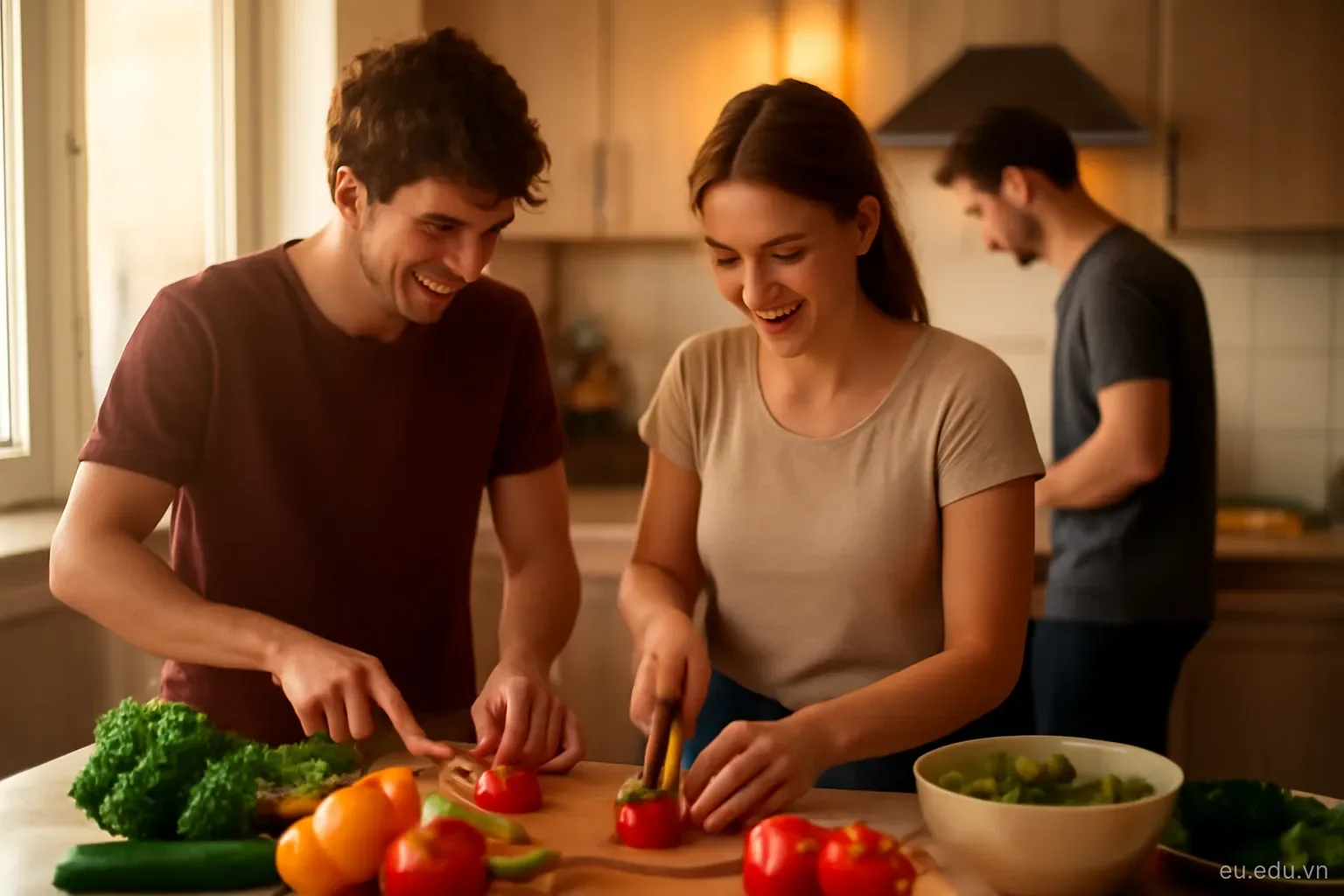
Rent and tuition are fixed. Food is the largest cost a student can actually influence — and it is where budgets most often fail.
The pattern is predictable: someone who never cooked before leaving home eats out or buys prepared food, and spends several times what cooking would cost.
Where the money actually goes
- Eating out and takeaway — by an enormous margin the biggest drain.
- Prepared and convenience food from supermarkets.
- Small frequent purchases — coffee, snacks, drinks on campus. Individually trivial, collectively large.
- Food waste — buying more than you use.
- Shopping while hungry and without a list.
- Convenience stores rather than supermarkets.
Shopping in Europe
- Discount supermarket chains exist across most of Europe and cost substantially less than premium chains for equivalent staples.
- Own-brand products are usually made to similar standards at much lower prices.
- Markets late in the day — traders reduce prices rather than carry stock home.
- Reduced sections in supermarkets, typically in the evening.
- Seasonal produce is dramatically cheaper than out-of-season imports.
- Frozen vegetables are cheap, keep indefinitely and are nutritionally solid.
- Buy staples in bulk — rice, pasta, pulses, oil — and fresh items in small amounts.
- Compare unit prices, not package prices. Shelf labels usually show this.
- Bring a bag. Most European supermarkets charge for them.
Watch for: shops closing early and on Sundays in many European countries, which catches new arrivals out. Plan your shopping around it.
Cooking with almost nothing
Student kitchens are often poorly equipped and shared. You need less than you think:
- One large pot, one frying pan, one knife, one chopping board. That covers most of it.
- Learn five dishes properly rather than many badly. Rotate them and add slowly.
- Batch cook and refrigerate or freeze portions. This is the single biggest time and money saver.
- One-pot meals reduce washing up, which matters more than expected in a shared kitchen.
- Build meals around cheap protein — eggs, pulses, tinned fish, whatever meat is inexpensive locally.
- Keep a basic store cupboard so you can always make something without shopping.
- Cook with housemates — sharing ingredients and effort cuts costs and builds the friendships that make the year bearable.
Finding familiar ingredients
Being able to cook food from home matters more than people expect — it is a genuine comfort during a hard period.
- Asian supermarkets exist in most European cities and often stock Vietnamese ingredients.
- Ask the local Vietnamese student community where they shop. This is the fastest route.
- Online ordering for specialist ingredients, shared with friends to reduce delivery costs.
- Bring seasonings and dried goods in your luggage — check import rules for your destination first, as restrictions on meat, dairy and fresh produce are strict.
- Learn substitutes using locally available ingredients.
- Cook for European friends. This is one of the easiest ways to build friendships and it usually gets reciprocated.
Eating adequately, not just cheaply
Undereating is common among students and it directly damages concentration and mood.
- Do not skip meals to save money. The academic cost outweighs the saving.
- Eat breakfast — skipping it is strongly associated with poor concentration in morning classes.
- Include protein at each meal to stay full and maintain energy.
- Vegetables in some form daily — frozen counts.
- Ask about vitamin D in northern European countries, particularly during winter with limited daylight. Speak to a doctor rather than self-prescribing.
- Drink water — tap water is safe and free in most of Europe, and bottled water is a needless recurring cost.
Campus and city options
- University canteens are subsidised in many European countries and can be cheaper than cooking for one.
- Student discount cards — find out what yours covers.
- Bring lunch rather than buying on campus. This alone is often the largest single saving available.
- A refillable bottle and a flask for coffee.
If money becomes genuinely tight
This happens and it is nothing to be ashamed of.
- Ask your university. Many have hardship funds that go unclaimed.
- Student unions often know about local support.
- Food banks and community meals exist in most European cities, including some run specifically for students.
- Food-sharing apps and community fridges redistribute surplus food and are widely used.
- Tell someone. Going hungry affects your studies and health quickly, and there is almost always help available if you ask.
The social side of food
Worth saying, because it is not only about money:
- Shared meals build friendships faster than almost anything.
- Cooking dishes from home for others gives you something to offer in a new place.
- Accept invitations even when you cannot reciprocate immediately.
- Potluck gatherings are cheap, common in Europe, and easy to organise.
- Eating alone every day is a quiet contributor to isolation — worth noticing if it becomes the pattern.
A workable weekly system
- Plan meals for the week before shopping.
- Write a list and stick to it.
- Shop once weekly for staples, with one small top-up for fresh items.
- Cook a large batch once or twice a week.
- Use leftovers deliberately rather than letting them spoil.
- Set a weekly food budget and track it for a month to see reality.
One thing worth remembering
Learning to cook a handful of meals properly is the highest-return skill a student can acquire in their first month abroad.
It saves more money than any other single change, it improves how you feel day to day, and it gives you something to share — which, in a place where you know nobody, turns out to matter as much as the saving.
Câu hỏi thường gặp
Where does student food money actually go?
Eating out and takeaway by an enormous margin, followed by prepared supermarket food, small frequent purchases on campus, and food waste from buying more than you use.
What is the biggest single saving available?
Bringing lunch rather than buying on campus, combined with batch cooking once or twice a week and freezing portions.
How much equipment do I need?
One large pot, one frying pan, one knife and one chopping board covers most cooking. Learn five dishes properly rather than many badly.
Where can I find Vietnamese ingredients?
Asian supermarkets exist in most European cities. The fastest route is asking the local Vietnamese student community where they shop.
What if money becomes genuinely tight?
Ask your university, since many have hardship funds that go unclaimed. Food banks, community meals and food-sharing apps exist in most European cities, and going hungry damages your studies quickly.